SUGGESTED ROUTES
Build a visit without rushing
One day to get your bearings
Begin with Baščaršija and Sebilj, then link the Gazi Husrev-beg Mosque, Latin Bridge and City Hall. Leave time for a proper lunch instead of collecting entrances. Add the Yellow Fortress only when the climb, daylight and weather suit you.
Two or three days at a gentler pace
Set aside half a day for a museum or memory site, and another for a neighbourhood or the hills. The Tunnel of Hope is not a quick stop between two central landmarks: arrange access separately and leave enough time for the visit.
Where to sleep and how to move
For frequent walks, compare addresses near the Old Town and Skenderija. A car is more useful when leaving Sarajevo: consider parking costs and whether you actually need it during central sightseeing days. Compare accommodation in our dedicated guide.
Documentary addition: 4 October 2026. Suggested routes, not tested on site; confirm access and conditions before travelling. Visit Sarajevo.
Fast-changing information — opening hours, ratings, prices, availability — should be checked on maps or official sites on the day of your visit.
What is the capital of Bosnia and Herzegovina?
Sarajevo is the capital of Bosnia and Herzegovina. It is also the country’s largest city and one of the most distinctive urban destinations in the Balkans. The historic centre stretches from the Ottoman-era lanes of Baščaršija toward Austro-Hungarian boulevards, Yugoslav neighborhoods and modern districts.
For travellers searching for the capital of Bosnia, Sarajevo is the practical starting point for understanding the country: its food, religions, architecture, museums, mountain setting and difficult twentieth-century history all meet here.
BOOK WITHOUT LOSING THE THREAD OF THE GUIDE
Plan your stay in Sarajevo
You know the destination. Move to booking step by step, with links matched to what you actually need.
1 · Where to stay
Compare accommodation in Sarajevo, then check dates, total price and conditions on the partner site.
See hotels in SarajevoSearch Sarajevo on Booking.comAccommodation guide for Sarajevo →2 · Getting around
Compare car hire options for Sarajevo. Check pickup location, deposit and conditions before booking.
Compare car hire3 · What to do
Browse activities and excursions in Sarajevo. Check the departure point, language and inclusions.
Browse activities4 · Arrival & connection
Compare flights, plan your transfer to Sarajevo and check your mobile connection before departure.
Affiliate links: an eligible booking or purchase may support Bosna Heritage. Prices, availability and conditions are set by the partner.
Bosnia at a glance
Where is Sarajevo?
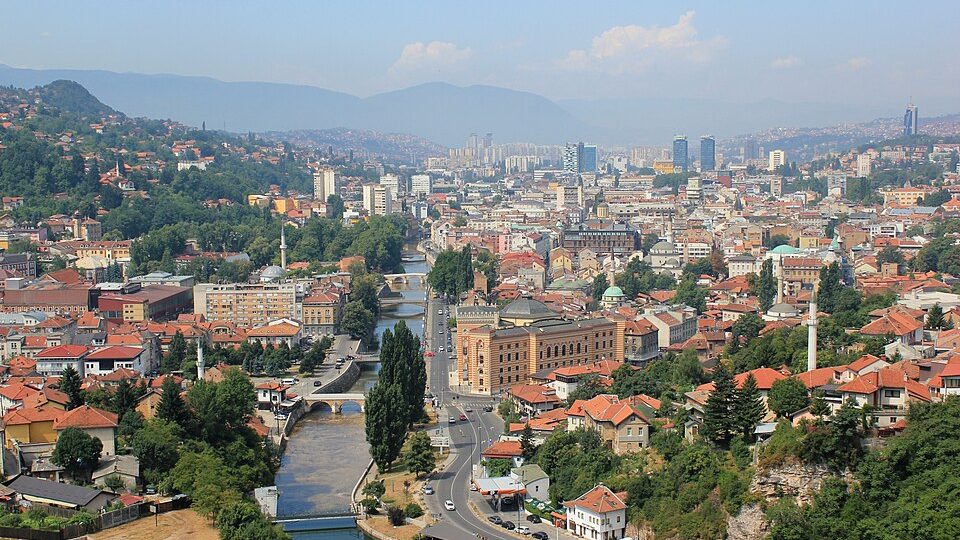
Sarajevo lies in a long valley surrounded by mountains in central Bosnia and Herzegovina. The Miljacka River runs through the city, linking the historic core with newer districts. Its geography matters: the hills create dramatic viewpoints, the mountains make day trips easy, and the compact centre means many major sights can be reached on foot.
The city is a useful base for onward travel to Mostar, Konjic, Travnik, Jajce and other destinations. Travellers often arrive by air at Sarajevo International Airport and then continue around the country by rental car, private driver, bus or organised tour.
Why Sarajevo matters
Sarajevo is more than an administrative capital. It is a city where several historical periods remain visible within a short walk. Ottoman-era mosques, markets and courtyards stand close to Austro-Hungarian facades, Orthodox and Catholic churches, a synagogue, Yugoslav architecture and contemporary cultural spaces.
That layered identity is one of the best reasons to visit. A traveller can begin the morning in Baščaršija, cross into the nineteenth-century centre, spend the afternoon in a museum, and end the day overlooking the city from the hills.
Best things to do in Sarajevo
Each place opens its own BosnaHeritage guide with visitor information and practical advice.
- Baščaršija: walk the old bazaar, side streets and courtyards around Sebilj.
- Vijećnica: see Sarajevo City Hall and the riverfront.
- Latin Bridge: explore the historic centre around the Miljacka.
- Gazi Husrev-beg Mosque: discover one of the city’s defining Ottoman landmarks.
- Tunnel of Hope Museum: learn about civilian life during the siege of Sarajevo.
- Yellow Fortress: go near sunset for one of the classic city views.
- Trebević: take the cable car for mountain air and wide views above the capital.
- Ilidža and Vrelo Bosne: add a greener, slower half-day outside the centre.
Baščaršija and the old city
Baščaršija is the historic heart of Sarajevo and the best place for a first orientation. Its lanes are filled with cafés, bakeries, ćevabdžinice, copper shops and religious buildings. It is compact enough to explore slowly, and that slower pace is part of the experience.
Rather than treating the old town as a checklist, spend time moving between the main streets and quieter side lanes. Look for craft workshops, courtyards and small cafés, and leave room for a proper Bosnian coffee rather than rushing from landmark to landmark.
Museums, memory and recent history
Sarajevo’s museums help explain both the longer history of the city and the 1992–1995 war. Visitors should approach war-related sites with respect and avoid reducing Sarajevo to a single period of suffering. The city’s memory institutions, cultural spaces and everyday life belong together.
Useful starting points include the Museum of Sarajevo, the Tunnel of Hope Museum and other institutions focused on the city’s twentieth-century history. Check official opening times before visiting because schedules can change.
Where to eat in Sarajevo
Sarajevo is one of the easiest places to discover Bosnian food. Start with ćevapi, burek and other pitas, then branch out into soups, slow-cooked dishes, grilled meats, sweets and Bosnian coffee. Small specialised restaurants are often a better introduction than menus trying to serve every cuisine at once.
For current opening hours and recent customer feedback, use Google Maps or the restaurant’s official page on the day you visit. Bosna Heritage does not reproduce third-party reviews.
Halal travel in Sarajevo
Sarajevo is particularly convenient for Muslim travellers because halal food, mosques and prayer facilities are easy to find in many central areas. Families from the Gulf and wider Middle East can also find private apartments, villas, drivers and Arabic-speaking services, although availability should always be verified directly before booking.
Where to stay in Sarajevo
For a first visit, Baščaršija and the central pedestrian area are convenient for sightseeing. Marijin Dvor suits travellers who prefer modern hotels, shopping and easy tram connections. Families or longer-stay visitors may prefer larger apartments slightly outside the busiest tourist streets.
Compare the exact location, cancellation terms, parking, air conditioning and accessibility before booking. Sarajevo is hilly outside the central valley, so a property that looks close on a map can still involve a steep walk.
How many days do you need in Sarajevo?
Three days is a strong first visit. Day one can focus on Baščaršija and the historic centre. Day two can combine museums, memory sites and Austro-Hungarian Sarajevo. Day three can include Trebević, Ilidža, Vrelo Bosne or slower neighborhood exploration.
If Sarajevo is part of a larger Bosnia itinerary, two full days can cover the essentials. Travellers interested in culture, food and history may prefer four or five days.
Sarajevo Airport and getting around
Sarajevo International Airport (SJJ) serves the capital. Taxis, private transfers and other local transport options connect the airport with the centre. Confirm the current fare or transfer price before travelling.
In the city centre, walking is usually the easiest option. Trams and buses are useful for longer distances, while taxis can help with hills, luggage or late arrivals.
Best time to visit Sarajevo
Spring and autumn are comfortable for walking and cultural sightseeing. Summer brings longer days and more visitors, while winter gives Sarajevo a completely different atmosphere and makes the surrounding mountains relevant for snow activities. Weather can change quickly because of the valley and mountain setting.
The live weather indicator at the top of Bosna Heritage gives a quick current reading, but travellers should use a detailed forecast when planning mountain trips or long outdoor days.
Continue from the Bosnian capital
Sarajevo works well as the first stop on a wider Bosnia and Herzegovina trip. Popular next stages include Mostar and Blagaj to the south, Konjic on the route toward Herzegovina, or Travnik and Jajce toward central and western Bosnia.
Internet / eSIM
Stay connected during your trip
Find an address, check a booking or contact your accommodation: plan your mobile connection as part of your stay.
Yesim offers data plans for Bosnia and Herzegovina. Before buying, check your phone and the conditions of the selected plan.
Open Yesim plans for Bosnia and Herzegovina. Check phone compatibility, duration, included data and tethering conditions.
Affiliate link: Bosna Heritage may earn a commission on an eligible purchase. Prices and the purchase contract are provided by the partner.
How to choose your eSIMHotels & apartments
Another way to find your accommodation
Keep your neighbourhood preferences in mind, then search Booking.com for accommodation that suits your stay.
On Booking.com, enter “Sarajevo”, your dates and the number of guests. The destination and dates are not prefilled.
Check the total price, facilities, cancellation terms and availability before booking.
Booking.com
Search on Booking.comAffiliate link: Bosna Heritage may earn a commission on an eligible booking. You choose and book on the partner site.
Sarajevo FAQ
What is the capital of Bosnia and Herzegovina?
Sarajevo is the capital of Bosnia and Herzegovina.
Is Sarajevo the capital of Bosnia?
Yes. Sarajevo is the national capital and the largest city in Bosnia and Herzegovina.
What currency is used in Sarajevo?
The official currency is the Bosnia and Herzegovina convertible mark (BAM).
Is Sarajevo worth visiting?
Yes. The city offers a compact mix of architecture, food, religious heritage, museums, café culture, viewpoints and easy access to the mountains.
How many days should I spend in Sarajevo?
Three days is ideal for a first visit. Two days cover the highlights, while four or five days allow a slower cultural trip and nearby excursions.
Is Sarajevo good for Muslim travellers?
Yes. Halal food and mosques are widely available, and the city has a strong infrastructure for family and Middle East travel. Always verify individual services before booking.
Sources and further verification
For current visitor information, opening hours and transport details, check official local tourism and museum sources before travelling.